
Stainless Steel Keel Thickness Options
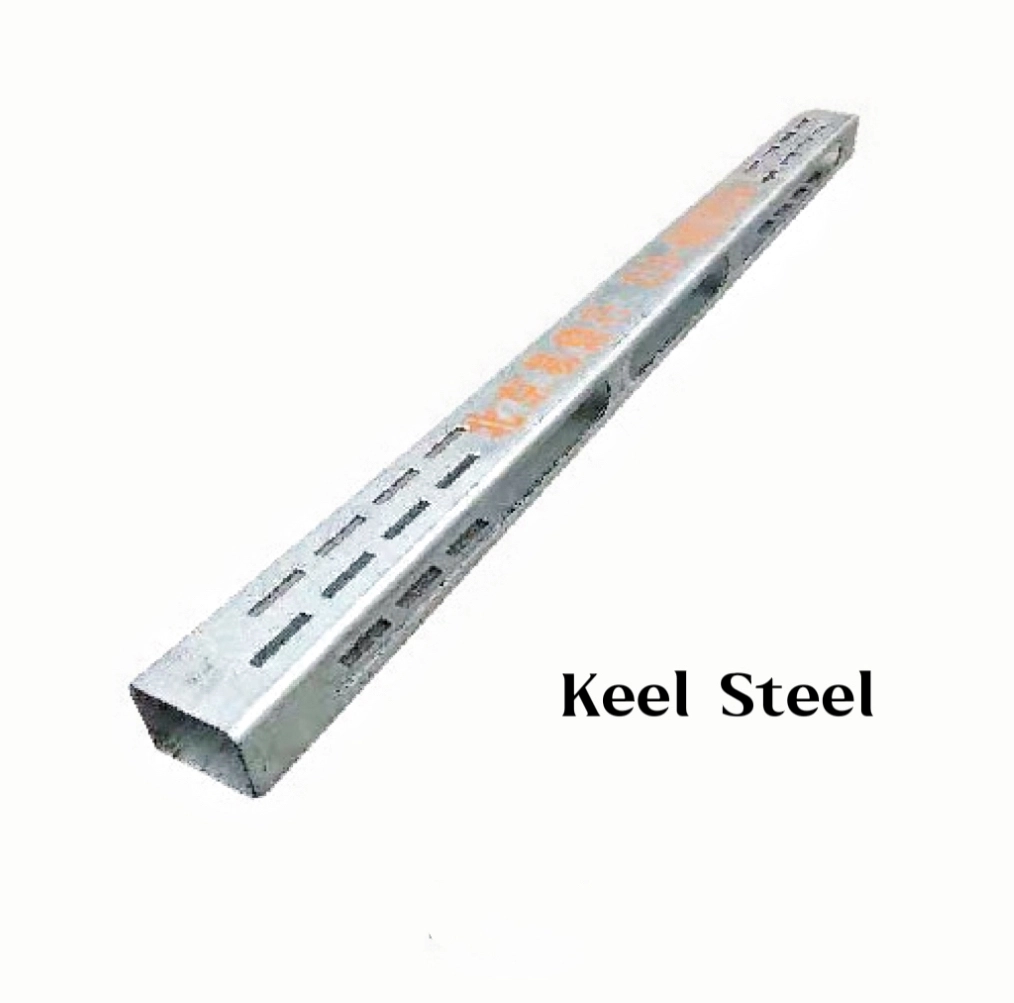
Understanding the thickness options for stainless steel keel products is essential for wholesalers to meet the diverse needs of construction projects, ensuring structural integrity, durability, and cost-effectiveness. HeBei Yidingxing Technology Co.,LTD., a leading manufacturer of stainless steel keel systems, recognizes that wholesalers require comprehensive knowledge of thickness variations to advise customers accurately, manage inventory efficiently, and support projects ranging from residential renovations to industrial construction. This guide explores the standard and specialized thickness options for stainless steel keel, their compatibility with stainless steel keel protector and stainless steel keel band accessories, and key factors influencing thickness selection, empowering wholesalers to deliver optimal solutions.
Stainless Steel keel Thickness Standards and Applications
Standard Thickness Ranges for General Construction
- Light-Duty Applications: stainless steel keel with thicknesses between 0.5mm and 1.0mm is ideal for light-duty applications such as interior partition walls, ceiling frameworks, and non-load-bearing structures. These thinner keels offer a balance of flexibility and strength, making them easy to install in residential and small commercial projects. HeBei Yidingxing Technology Co.,LTD. reports that 0.8mm keels are their best-selling light-duty option, favored for their versatility.
- Medium-Duty Applications: For medium-duty use—including load-bearing partitions, retail store fixtures, and warehouse shelving supports—stainless steel keelthicknesses range from 1.0mm to 1.5mm. These keels provide enhanced rigidity to withstand moderate loads, ensuring stability over extended periods. HeBei Yidingxing Technology Co.,LTD.’s 1.2mm keel is a popular choice, meeting most regional building codes for medium-load requirements.
- Heavy-Duty Applications: Heavy-duty projects such as industrial machinery platforms, exterior cladding supports, and high-rise building frameworks require stainless steel keelwith thicknesses of 1.5mm to 3.0mm. These thick keels offer superior tensile strength and resistance to bending under extreme loads, making them suitable for harsh environments.
Specialized Thickness Options for Niche Projects
- Ultra-Thin Keels: stainless steel keelwith thicknesses as low as 0.3mm to 0.5mm is available for specialized applications where weight and space are critical, such as temporary event structures or lightweight modular buildings. HeBei Yidingxing Technology Co.,LTD. produces these ultra-thin keels with precise dimensional control to ensure consistent performance despite their reduced thickness.
- Extra-Thick Keels: For extreme load-bearing scenarios—including bridge components, marine structures, and industrial crane supports—stainless steel keelthicknesses of 3.0mm to 5.0mm are required. These keels undergo rigorous testing to verify their ability to withstand corrosion, vibration, and heavy static loads, with HeBei Yidingxing Technology Co.,LTD. offering custom fabrication for project-specific thickness requirements.
Table: stainless steel keel Thickness and Performance Metrics
|
Thickness (mm) |
Tensile Strength (MPa) |
Maximum Load Capacity (kg/m) |
Typical Applications |
Compatible Accessories |
|
0.5–1.0 |
500–600 |
100–300 |
Interior partitions, ceiling grids |
stainless steel keel protector (0.5mm) |
|
1.0–1.5 |
600–700 |
300–600 |
Retail fixtures, warehouse shelving |
stainless steel keel band (1.0mm), protector (0.8mm) |
|
1.5–3.0 |
700–900 |
600–1500 |
Industrial platforms, exterior cladding |
stainless steel keel band (1.2mm–1.5mm) |
|
3.0–5.0 |
900–1200 |
1500–3000 |
Marine structures, heavy machinery supports |
Custom stainless steel keel band (2.0mm+) |
Stainless Steel keel Protector and Thickness Compatibility
Protector Thickness and Keel Matching
- Light-Duty Protection: stainless steel keel protectorwith thicknesses of 0.3mm to 0.5mm is designed to pair with 0.5mm–1.0mm stainless steel keel. These thin protectors shield keels from minor abrasions, scratches, and moisture in low-risk environments, such as interior walls. HeBei Yidingxing Technology Co.,LTD. recommends their 0.4mm protector for this range, as it adds minimal weight while providing adequate coverage.
- Medium-Duty Protection: For 1.0mm–1.5mm stainless steel keel, stainless steel keel protectorwith thicknesses of 0.5mm to 0.8mm is ideal. These protectors offer enhanced resistance to impact and corrosion, suitable for high-traffic areas like shopping malls or office lobbies. The protector’s thickness is engineered to avoid interfering with keel installation or load-bearing capacity.
- Heavy-Duty Protection: stainless steel keelthicker than 1.5mm requires stainless steel keel protector of 0.8mm to 1.2mm. These robust protectors withstand industrial-grade wear, including exposure to chemicals, extreme temperatures, and mechanical stress. HeBei Yidingxing Technology Co.,LTD.’s 1.0mm protector is specifically formulated for this range, featuring a reinforced edge design to prevent lifting.
Installation Considerations for Protected Keels
- Clearance Requirements: When pairing stainless steel keel protectorwith keels, ensure there is sufficient clearance for fasteners and adjacent materials. HeBei Yidingxing Technology Co.,LTD. provides detailed dimension charts showing the combined thickness of keel and protector, helping wholesalers avoid compatibility issues with other construction components.
- Adhesion and Fastening: Thicker protectors may require specialized fasteners (e.g., longer screws) to ensure secure attachment to stainless steel keel. HeBei Yidingxing Technology Co.,LTD. recommends using their proprietary self-tapping screws, which are sized to accommodate both keel and protector thickness without compromising structural integrity.
- Edge Coverage: The stainless steel keel protectorshould extend 5mm–10mm beyond the keel’s edges to prevent moisture infiltration at vulnerable points. This is particularly critical for exterior applications, where edge corrosion can spread to the entire keel structure.
Stainless Steel keel Band and Thickness Compatibility
Band Thickness and Keel Sizing
- Light-Duty Bands: stainless steel keel bandwith thicknesses of 0.6mm to 0.8mm is designed for 0.5mm–1.0mm stainless steel keel. These bands secure keels to wall studs or ceiling joists in low-load applications, providing lateral stability without adding excessive bulk. HeBei Yidingxing Technology Co.,LTD.’s 0.7mm band features pre-punched holes spaced 50mm apart, simplifying alignment during installation.
- Medium-Duty Bands: For 1.0mm–1.5mm stainless steel keel, stainless steel keel bandthicknesses of 0.8mm to 1.2mm are required. These bands offer increased clamping force to resist movement under moderate vibration or load shifts, making them suitable for retail shelving or light industrial use. The band’s thickness ensures it does not deform when tightened around the keel.
- Heavy-Duty Bands: stainless steel keelthicker than 1.5mm demands stainless steel keel band of 1.2mm to 1.5mm. These bands provide industrial-strength securing, critical for machinery mounts or exterior structures exposed to wind and seismic activity. HeBei Yidingxing Technology Co.,LTD.’s 1.4mm band includes a locking mechanism to maintain tension over time, preventing loosening in high-stress environments.
Band Application Techniques by Keel Thickness
- Bending and Forming: Thinner stainless steel keel band(0.6mm–0.8mm) is easier to bend manually, allowing for on-site adjustments to fit 0.5mm–1.0mm keels. Heavier bands (1.2mm+) require mechanical bending tools to achieve precise angles, ensuring a tight fit around thick stainless steel keel. HeBei Yidingxing Technology Co.,LTD. offers a portable bending tool compatible with their full range of bands.
- Tension Control: The tension applied to stainless steel keel bandmust be adjusted based on keel thickness—over-tightening thin bands on thick keels can cause band failure, while under-tightening thick bands on thin keels may result in slippage. HeBei Yidingxing Technology Co.,LTD. provides a tension guide specifying torque values for each keel and band thickness combination.
- Spacing and Load Distribution: For thick stainless steel keel, stainless steel keel bandshould be spaced closer together (every 300mm–400mm) to distribute loads evenly. Thinner keels can use wider spacing (400mm–600mm) without compromising stability. This spacing is critical for preventing keel warping or collapse under uneven weight.
Factors Influencing stainless steel keel Thickness Selection
Environmental Conditions
- Corrosion Risk: In high-humidity environments (e.g., coastal areas, swimming pools) or locations with chemical exposure (e.g., factories, laboratories), thicker stainless steel keel(1.5mm+) is recommended. The increased thickness provides a larger corrosion allowance, extending the keel’s lifespan. HeBei Yidingxing Technology Co.,LTD. also offers marine-grade stainless steel keel in these thicknesses, alloyed with molybdenum for enhanced rust resistance.
- Temperature Extremes: Extreme temperature fluctuations can cause thermal expansion and contraction, stressing stainless steel keel. Thicker keels (1.2mm+) are more resistant to warping under these conditions, making them suitable for regions with harsh winters or scorching summers. HeBei Yidingxing Technology Co.,LTD.’s 1.4mm keel undergoes thermal cycling testing to ensure stability in temperatures ranging from -40°C to 80°C.
- UV Exposure: Exterior stainless steel keelexposed to prolonged sunlight may degrade over time, especially in thin gauges. Thicker keels (1.0mm+) are less susceptible to UV-induced brittleness, maintaining structural integrity for decades. Pairing them with stainless steel keel protector further mitigates UV damage.
Load-Bearing Requirements
- Static Loads: The thickness of stainless steel keelmust be matched to the static load it supports, such as the weight of building materials or equipment. HeBei Yidingxing Technology Co.,LTD.’s engineering team provides load-calculation tools that recommend keel thickness based on projected static loads, ensuring compliance with safety standards.
- Dynamic Loads: Dynamic loads—including foot traffic, machinery vibration, or wind forces—require thicker stainless steel keelto absorb energy without deformation. For example, a warehouse with frequent forklift traffic may require 1.5mm keels, while a wind-prone coastal building might need 2.0mm keels.
- Span Length: Longer spans between support points necessitate thicker stainless steel keelto prevent sagging. As a general rule, keel thickness should increase by 0.2mm for every additional meter of span beyond 3 meters. HeBei Yidingxing Technology Co.,LTD. offers span-thickness charts to simplify this calculation for wholesalers and their customers.
Stainless Steel keel FAQS
What is the most versatile thickness for stainless steel keel?
The most versatile thickness for stainless steel keel is 1.2mm, as it balances strength, weight, and cost for a wide range of applications—from interior partitions to medium-load exterior structures. This thickness works with standard stainless steel keel protector (0.6mm–0.8mm) and stainless steel keel band (0.8mm–1.0mm), making it compatible with most accessory systems. HeBei Yidingxing Technology Co.,LTD. reports that 1.2mm keels account for over 40% of their sales due to this versatility.
How does stainless steel keel thickness affect corrosion resistance?
stainless steel keel thickness directly impacts corrosion resistance: thicker keels provide a larger material reserve to withstand rust or chemical erosion over time. For example, a 2.0mm keel in a coastal environment will last significantly longer than a 0.8mm keel under the same conditions, as the extra thickness delays penetration to the core. Pairing thick keels with stainless steel keel protector further extends lifespan by adding a protective layer.
Can stainless steel keel band of a different thickness be used with a keel?
While stainless steel keel band of a different thickness can sometimes be used with a keel, it is not recommended. A band that is too thin may fail under tension when securing a thick keel, while an overly thick band may be difficult to bend or may damage the keel’s surface. HeBei Yidingxing Technology Co.,LTD. advises using bands specifically matched to keel thickness for optimal performance and safety.
What thickness stainless steel keel is required for exterior walls?
Exterior walls typically require stainless steel keel with a thickness of at least 1.5mm to withstand environmental stressors like wind, rain, and temperature fluctuations. This thickness ensures the keel maintains rigidity against lateral forces and resists corrosion from moisture. For high-wind zones or coastal areas, HeBei Yidingxing Technology Co.,LTD. recommends 2.0mm keels paired with 1.0mm stainless steel keel protector.
How do I determine the right stainless steel keel thickness for a custom project?
To determine the right stainless steel keel thickness for a custom project, consider environmental conditions, load requirements, and span length. HeBei Yidingxing Technology Co.,LTD. provides a free online calculator that inputs these variables and recommends a thickness, or their technical team can conduct a detailed structural analysis. It is also critical to check local building codes, which may specify minimum thicknesses for certain applications, and ensure compatibility with stainless steel keel band and protector accessories.
Selecting the appropriate stainless steel keel thickness is a critical decision that impacts structural performance, durability, and project costs. From light-duty 0.5mm keels for interior use to heavy-duty 5.0mm keels for industrial applications, each thickness serves a specific purpose, influenced by environmental factors, load requirements, and accessory compatibility with stainless steel keel protector and stainless steel keel band.
HeBei Yidingxing Technology Co.,LTD.’s commitment to precision manufacturing, custom solutions, and technical support empowers wholesalers to navigate these options confidently. By leveraging their expertise in thickness standards, compatibility guidelines, and application-specific recommendations, wholesalers can provide customers with tailored solutions that meet safety codes and project needs.
Ultimately, understanding stainless steel keel thickness options ensures that wholesalers remain valuable partners in construction projects, delivering products that balance strength, durability, and cost-effectiveness—key to long-term success in the building materials market.
-
Comprehensive Guide to Scaffolding Rods for Safe Construction PracticesNewsFeb.24,2026
-
Comprehensive Guide to Different Types of Scaffolding for Construction ProjectsNewsFeb.11,2026
-
The Crucial Role and Safe Use of Scaffolding in Modern Construction ProjectsNewsJan.30,2026
-
Maximize Productivity and Safety with a Versatile 7m Scaffold TowerNewsJan.27,2026
-
6m Scaffold Tower: A Comprehensive Guide for B2B BuyersNewsJan.26,2026
-
6ft Scaffold: Durability and Safety in ConstructionNewsJan.25,2026
-
6 Scaffolding: A Modern Construction SolutionNewsJan.24,2026