
Narrow Scaffold Tower Solutions: Efficiency and Safety for Industrial Applications | Formwork Reinforced
Narrow Scaffold Tower is a key solution in the industry, specifically within sectors where space constraints and safety converge on construction and maintenance sites. This article explores how https://www.formworkreinforced.com supports professionals with durable, high-performance products, and explains why this product is an ideal choice for businesses in these sectors.
Table of Contents
- Narrow Scaffold Tower Overview
- Benefits & Use Cases of Narrow Scaffold Tower
- Cost, Maintenance & User Experience
- Sustainability & Market Trends
Narrow Scaffold Tower Overview
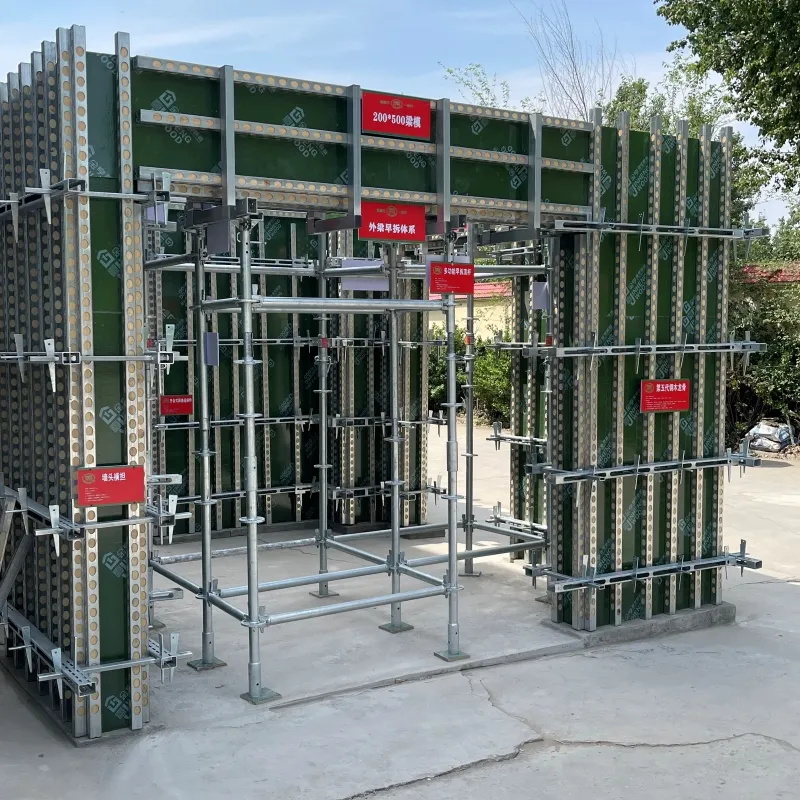
The Narrow Scaffold Tower is precisely what it sounds like: a scaffold tower designed with a slim profile, ideal for tight spaces and areas where maneuverability is challenging. Unlike traditional scaffold towers that can be bulky, these narrow versions allow workers to access elevated areas without compromising safety or stability. Frankly, in many urban sites or indoor maintenance projects, space is premium and a bulky tower just won’t cut it.
- Dimensions typically start as narrow as 0.75 meters wide, but still support considerable height and load.
- Constructed primarily with lightweight aluminum and reinforced steel framing, ensuring both strength and easier transport.
Take for example a recent project where a renovation company used narrow scaffold towers to access ceiling ducts inside a busy hospital wing. The compact footprint of the towers allowed setup in hallways as narrow as one meter wide — a space where traditional towering scaffolds simply couldn't fit.
| Feature | Specification |
|---|---|
| Width | 0.75m to 1.2m |
| Maximum Height | Up to 12m with brakets |
| Material | Aluminum & Reinforced Steel |
| Load Capacity | Up to 250 kg per platform |
| Assembly Time | Approx. 20 minutes by 2 trained workers |
Benefits & Use Cases of Narrow Scaffold Tower
Narrow Scaffold Towers aren’t just about fitting into tight spots; they bring a host of benefits that have convinced many professionals to switch from older models. For starters, their lightweight design makes transporting and repositioning much simpler, reducing downtime on jobsites. Plus, they often feature quick-lock mechanisms, which frankly, speeds up assembly to an admirable degree.
- Ideal for indoor maintenance, facade work in dense urban environments, and retrofitting projects.
- Improved safety features including guardrails and anti-slip platforms reduce work accidents.
Commercial cleaning companies, for example, praise how the narrow scaffold towers enable easier maneuvering around glass facades or escalators where a traditional scaffold would be a hazard or simply unusable. Not to mention, these towers comply with numerous global safety standards, which can be a relief for compliance managers juggling regulations.
Cost, Maintenance & User Experience
When looking at the total cost of ownership, it’s worth noting that narrow scaffold towers, while sometimes pricier upfront than cheaper bulky alternatives, often translate into better ROI. Their durability — thanks largely to aluminum components resistant to corrosion — means less frequent replacement or repairs. Many site managers report less downtime related to scaffolding issues, which frankly saves money in the long run.
- Lower maintenance costs due to corrosion-resistant materials.
- Positive user feedback often highlights ease of assembly and compact storage.
For instance, one industrial client mentioned they reduced setup time by nearly 30%, which in an hourly labor context, quickly adds up to substantial savings. It’s the little things — like ergonomic frame grips — that make a surprisingly big difference in fatigue and safety.
Sustainability & Market Trends
Sustainability is no longer a buzzword but a demand from industries worldwide. Narrow scaffold towers embody this shift by using recyclable materials, minimizing waste, and often crafted with modularity in mind to maximize lifespan. Additionally, regulatory bodies increasingly enforce stricter safety and environmental codes, nudging manufacturers like Formwork Reinforced to innovate continuously.
Interestingly, the demand for narrow scaffold towers is expected to grow as urban construction densifies and industries seek greener, safer solutions. With smart materials and digital integration on the horizon — think embedded sensors for structural integrity monitoring — these scaffold towers might just get a whole lot smarter in the near future.
| Feature | Formwork Reinforced | Competitor A | Competitor B |
|---|---|---|---|
| Material Quality | Aluminum Alloy & Steel | Steel Only | Aluminum |
| Assembly Time | 20 min (2 workers) | 30 min | 25 min |
| Load Capacity | 250 kg/platform | 200 kg/platform | 220 kg/platform |
| Price (Approx.) | $$$ | $$ | $$$ |
| Safety Certification | EN 1004, OSHA | EN 1004 | None Listed |
Frequently Asked Questions about Narrow Scaffold Tower
- What is Narrow Scaffold Tower and how does it work?
- A Narrow Scaffold Tower is a compact scaffold designed with a slim width to fit into tight or confined workspaces. It functions like regular scaffold towers but prioritizes space efficiency, offering a stable platform for workers at height with minimal footprint.
- What are the main benefits of using Narrow Scaffold Tower in industrial applications?
- They allow access in restricted spaces, reduce set-up time thanks to lightweight materials and quick assembly features, and improve safety through enhanced design elements like guard rails and anti-slip surfaces.
- How does Narrow Scaffold Tower compare to traditional alternatives?
- Narrow Scaffold Towers typically offer easier transport and assembly, better ergonomics, and the ability to work in confined spaces where conventional towers cannot go. While costs might be higher, their efficiency and flexibility often offset this.
- What industries can benefit most from Narrow Scaffold Tower implementation?
- Construction, building maintenance, cleaning services, and industrial manufacturing sectors benefit greatly, especially where space is limited but height access remains essential.
Conclusion on Narrow Scaffold Tower from china
In real terms, the Narrow Scaffold Tower represents a perfect balance between innovation, safety, and practicality. Its compact design solves many of the spatial challenges who face on contemporary job sites. For companies looking to enhance efficiency and worker safety, this product is clearly a worthwhile investment.
- It’s a smart choice for industries demanding reliable, space-conscious scaffolding solutions.
- - Visit our website: https://www.formworkreinforced.com
Reflecting on all this, it’s interesting how design tweaks around spatial constraints can distinctly upend an industry’s approach to safety and efficiency — quite a reminder of how engineering and practical needs always dance together.
References:
1. EN 1004 Scaffold Standards Documentation
2. OSHA Scaffold Safety Guidelines
3. Industry Case Study: Hospital Renovation with Narrow Scaffold Towers
-
Comprehensive Guide to Scaffolding Rods for Safe Construction PracticesNewsFeb.24,2026
-
Comprehensive Guide to Different Types of Scaffolding for Construction ProjectsNewsFeb.11,2026
-
The Crucial Role and Safe Use of Scaffolding in Modern Construction ProjectsNewsJan.30,2026
-
Maximize Productivity and Safety with a Versatile 7m Scaffold TowerNewsJan.27,2026
-
6m Scaffold Tower: A Comprehensive Guide for B2B BuyersNewsJan.26,2026
-
6ft Scaffold: Durability and Safety in ConstructionNewsJan.25,2026
-
6 Scaffolding: A Modern Construction SolutionNewsJan.24,2026