
Lightweight Scaffolding Solutions for Industrial Efficiency
Lightweight Scaffolding: The Future of Industrial Access Solutions
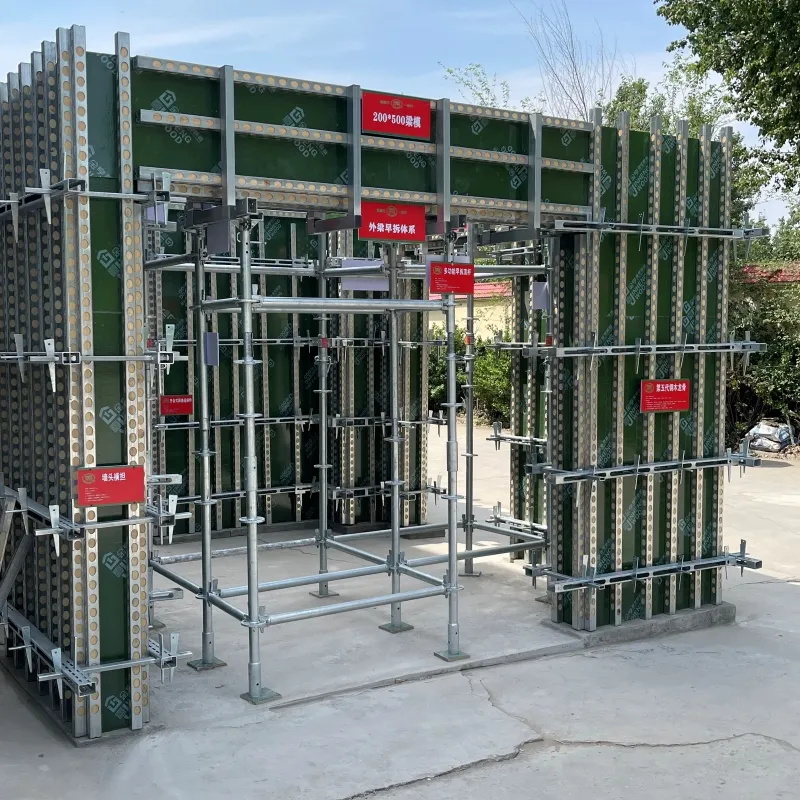
Having spent quite a few years around industrial equipment, I’ve seen firsthand how the right scaffolding can change the game on-site — and lightweight scaffolding is where things are really moving forward. It’s not just about cutting down weight; it’s about improving safety, efficiency, and even cost-effectiveness in ways that feel subtly transformative if you work closely with these structures every day.
You know, when I first encountered lightweight scaffolding frames made from high-grade aluminum alloys, I was skeptical. Can something that feels so light still hold up under the brutal physical demands of a busy construction site? But oddly enough, the material science behind it is pretty impressive. These frames are designed to withstand high wind loads, heavy static weights, and the rough handling that’s inevitable on-site, all without the bulkiness or clunkiness that traditional steel systems bring.
In real terms, this means faster setup and takedown — which, frankly, can save hours of labor and reduce downtime. That’s a big deal because time is money on a project schedule. Plus, lighter components mean fewer injuries related to manual handling. Many engineers I know stress how ergonomics are slowly but surely becoming a critical part of safety protocols, and lightweight scaffolding fits right into that narrative.
Here’s a quick rundown of typical specs you’ll find on a modern lightweight scaffolding system:
| Spec | Details |
|---|---|
| Material | Aluminum Alloy 6061-T6 |
| Weight per Frame | 18 - 22 kg (varies by size) |
| Max Load Capacity | 750 kg/m² |
| Dimensions | Adjustable Heights from 1.2m to 3.0m |
| Finish | Anodized corrosion resistant |
It’s worth noting that not all lightweight scaffolding is created equal. For example, I once toured a job site where one vendor’s system felt noticeably sturdier despite being similarly weighted. This speaks to the finer points of engineering design — things like joint fasteners, bracing systems, and finish treatments — that don’t show up on spec sheets but really matter in practice.
| Vendor | Weight per Frame (kg) | Load Capacity (kg/m²) | Corrosion Protection | Price Range |
|---|---|---|---|---|
| Vendor A | 20 | 750 | Anodized Aluminum | $$$ |
| Vendor B | 18 | 700 | Powder Coated Steel | $$ |
| Vendor C | 22 | 800 | Hot-Dip Galvanized | $$$$ |
Customization is another boon. These systems often come with modular add-ons like guardrails, toe boards, and adjustable platforms tailored for different industrial and construction applications. I recall one project where a client needed rapid reconfiguration between floors with varying dimension constraints—lightweight scaffolding made those mid-day adjustments much smoother than traditional steel equivalents.
Of course, testing and certification are crucial. Most reputable manufacturers ensure compliance with standards such as EN 12811 (Europe) or OSHA guidelines (US). If you’re investing in lightweight scaffolding, you want to see those test reports. It’s somewhat reassuring to know that these seemingly delicate frames have undergone rigorous load and environmental testing before arriving on your site.
And let’s just be honest — working with lighter scaffolding also has a morale boost. When crew members don’t come home sore or bruised from shifting heavy steel sections, that’s a win on every level. Safety, efficiency, and quality converge in ways that make me think this technology is here to stay.
So, if you’re scouting for scaffolding that balances portability with durability, I’d suggest giving lightweight scaffolding a hard look. From personal experience and from countless peers, it feels like this is less a compromise and more an evolution.
“A good scaffold doesn’t just get the job done; it makes every job easier.”
And if you want to explore more about lightweight scaffold solutions, this site always has some strong options worth investigating.
References
- European Standard EN 12811-1: Temporary works equipment – Scaffolds – Performance requirements and general design
- Occupational Safety and Health Administration (OSHA) guidelines on scaffolding (29 CFR 1926 Subpart L)
- Aluminum Structural Alloys, ASM International Handbook, Volume 2
-
Comprehensive Guide to Scaffolding Rods for Safe Construction PracticesNewsFeb.24,2026
-
Comprehensive Guide to Different Types of Scaffolding for Construction ProjectsNewsFeb.11,2026
-
The Crucial Role and Safe Use of Scaffolding in Modern Construction ProjectsNewsJan.30,2026
-
Maximize Productivity and Safety with a Versatile 7m Scaffold TowerNewsJan.27,2026
-
6m Scaffold Tower: A Comprehensive Guide for B2B BuyersNewsJan.26,2026
-
6ft Scaffold: Durability and Safety in ConstructionNewsJan.25,2026
-
6 Scaffolding: A Modern Construction SolutionNewsJan.24,2026